Common masonry restoration mistakes masonry restoration stands at a delicate crossroads between preservation science and structural engineering, demanding a rare convergence of historical insight and material chemistry. When historic brickwork, sandstone cornices, or terra cotta assemblies begin to fail, property owners often turn to contractors expecting straightforward repairs. Yet, exterior masonry is a living, breathing system governed by complex vapor dynamics and structural physics.
The pursuit of architectural longevity requires an acute awareness of the pitfalls that plague the restoration industry. This guide explores the analytical frameworks, technical blunders, and operational realities required to preserve masonry assets successfully over generations.
Understanding “common masonry restoration mistakes”
 The phrase common masonry restoration mistakes is frequently oversimplified in commercial contracting to mean minor cosmetic errors like color-mismatching mortar or minor surface chipping. In professional building pathology and conservation architecture, however, these errors represent deep-seated failures in material science and structural physics. No two masonry assemblies behave identically; what works for a modern concrete block wall will inevitably destroy a pre-1900s soft-brick or limestone facade. True technical mastery requires cataloging past failures to ensure every intervention respects the original material hierarchy.
Deep Contextual Background: The Evolution of Masonry Construction
Common masonry restoration mistakes historically, masonry construction relied on mass-wall engineering principles. Buildings constructed before the mid-20th century utilized soft, porous clay bricks or natural stones bedded in vapor-permeable lime mortars. These thick assemblies managed moisture through absorption, storage, and subsequent evaporation, functioning on an open-system model that relied on natural seasonal drying cycles to maintain structural equilibrium.
The introduction of Portland cement, cavity-wall construction, and structural steel skeletons in the late 19th and early 20th centuries fundamentally altered masonry behavior. Neglecting this historical evolution remains one of the primary drivers of common masonry restoration mistakes observed in modern restoration projects.
Conceptual Frameworks and Mental Models for Restoration Pathology Common Masonry Restoration Mistakes
Analyzing complex masonry degradation requires structured mental models that prevent reactionary, destructive repair decisions.
-
The Sacrificial Mortar Principle: In traditional masonry, mortar must always be softer, more vapor-permeable, and more flexible than the masonry unit itself. Mortar acts as the sacrificial relief valve; if moisture or thermal stress causes damage, the mortar should crack or erode rather than shattering the expensive brick or stone face.
-
The Vapor Permeability Gradient Model: Moisture constantly moves through exterior walls via vapor diffusion and capillary action. Any repair material applied to the wall must possess an equal or greater vapor permeability than the substrate behind it to prevent moisture entrapment.
-
The Asymmetric Weathering Hypothesis: Masonry degradation rarely occurs uniformly. Solar orientation, prevailing wind-driven rain, and freeze-thaw cycles create severe micro-climatic disparities across different elevations, requiring localized diagnostic strategies rather than blanket solutions.
-
The Rigid-Boundary Stress Concentration: Constraining a flexible historic wall with rigid modern patches or anchors creates intense localized stress concentrations, leading to cracking and accelerated face spalling under thermal expansion.
Key Categories, Variations, and Trade-Offs
Masonry restoration encompasses multiple distinct operational phases, each fraught with specific technical pitfalls. Understanding the trade-offs inherent in these procedures helps professionals avoid common masonry restoration mistakes on site.
Strategic Decision Logic for Category Selection
When planning a comprehensive masonry intervention, project managers must weigh structural safety urgency against historical preservation mandates. Safety hazards—such as loose stone cornices, unstable parapets, or collapsing lintels—demand immediate structural stabilization regardless of aesthetic mortar matching. Conversely, aesthetic cleaning and minor joint repointing should be scheduled only after bulk water infiltration vectors (roof leaks, failing gutters, and defective flashings) have been completely resolved.
Detailed Real-World Scenarios and Operational Constraints Common Masonry Restoration Mistakes
Historic Institutional Building Repointing Failure
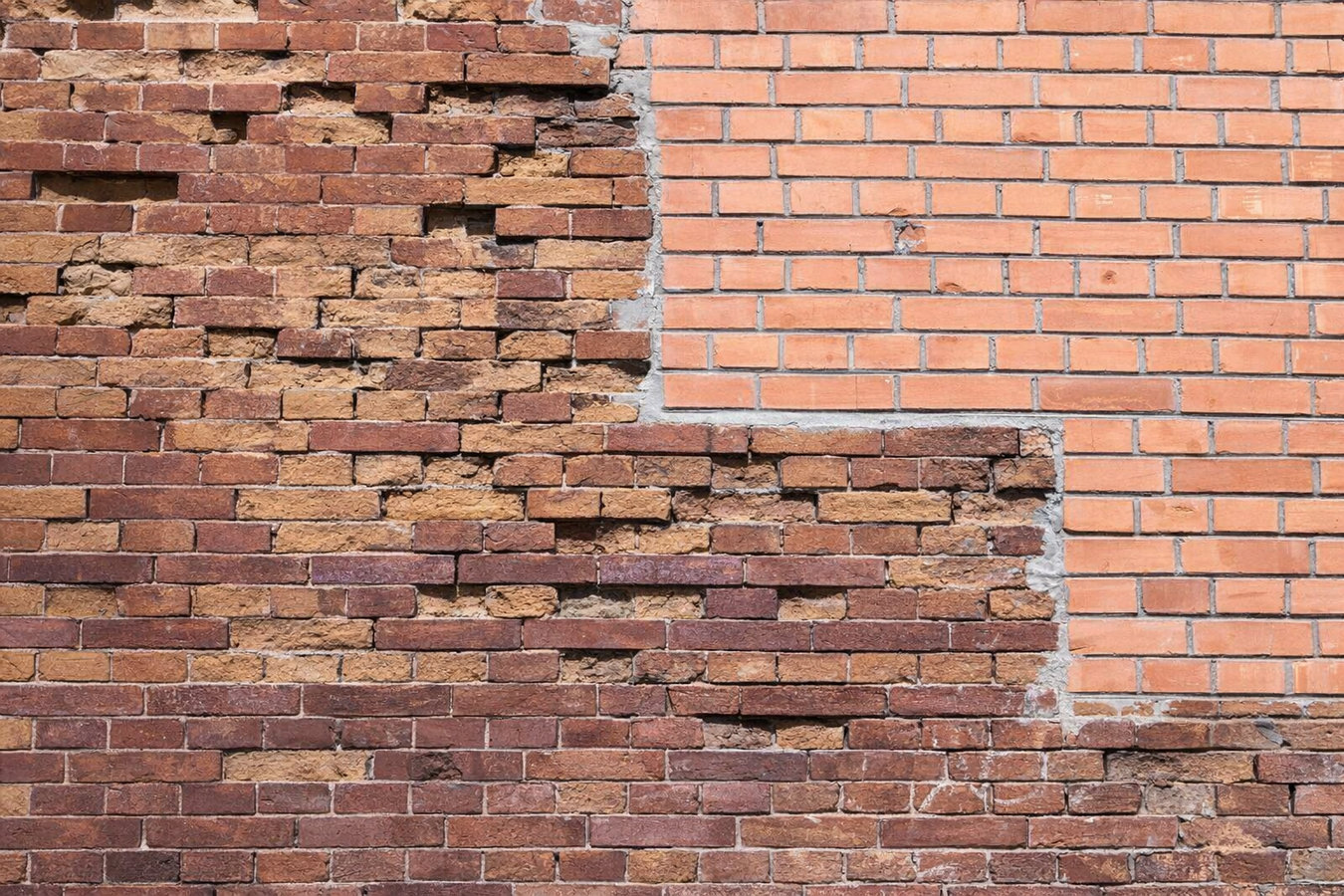
An 1895 university building constructed with soft, low-fired clay bricks and traditional lime mortar undergoes a major maintenance campaign where contractors use high-strength Type S Portland cement for repointing.
-
Constraints: Tight budget, pressure to complete work during summer academic break, lack of specialized historic masonry subcontractors.
-
Decision Points: Choosing between matching the original lime-sand mix versus opting for a fast-cured, hard commercial Portland mortar for speed and durability.
-
Failure Modes: The hard cement mortar proves inflexible and impermeable. During the subsequent winter freeze-thaw cycle, moisture trapped behind the hard joints expands, causing the delicate brick faces to shear off in large sheets (spalling).
-
Second-Order Effects: The building suffers irreversible historic fabric loss, and the masonry requires extensive, costly unit replacement rather than simple maintenance.
High-Rise Masonry Cleaning Damage
A 12-story commercial office building featuring ornate cast stone and sandstone details is subjected to aggressive high-pressure power washing and harsh muriatic acid cleaning.
-
Constraints: Strict downtown aesthetic cleanliness requirements, active ground-floor retail tenancy.
-
Decision Points: Deciding between low-pressure chemical washing with neutralizers versus high-pressure mechanical abrasive blasting.
-
Failure Modes: Excessive water pressure (exceeding 500 PSI) and acidic wash strip away the outer matrix of the sandstone, exposing soft interior aggregate and accelerating future atmospheric pollutant absorption.
-
Second-Order Effects: The stone surface becomes highly porous, initiating rapid granular disintegration and requiring subsequent consolidation treatments and surface patching.
Improper Waterproof Coating on Residential Brick
A historic brick apartment building experiences minor interior dampness during heavy rainstorms, prompting the property owner to apply a thick layer of exterior waterproof silicone sealer across the entire facade.
-
Constraints: Desire for a quick, inexpensive fix to avoid complex investigative engineering fees.
-
Decision Points: Selecting a breathable silane/siloxane sealer versus a non-breathable film-forming acrylic or silicone coating.
-
Failure Modes: The film-forming coating seals the bricks completely. While it stops liquid rain from entering, it also prevents the wall from drying outward. Internal vapor from heating systems becomes trapped behind the coating, freezing in winter and causing widespread efflorescence and masonry cracking.
-
Second-Order Effects: The coating must be chemically stripped at great expense, and damaged masonry units must be cut out and replaced.
Planning, Cost, and Resource Dynamics
Executing complex masonry restoration requires accounting for hidden variables that routine visual walkthroughs cannot uncover before scaffolding erection. Direct costs encompass specialized labor, custom mortar matching, scaffolding engineering, and stone procurement. Indirect costs involve tenant disruption, prolonged municipal permitting, and forensic engineering fees.
Opportunity costs play a major role in commercial real estate. Delaying proper masonry rehabilitation to save short-term operating capital frequently results in exponential cost escalation when minor moisture intrusion evolves into extensive structural timber rot, interior mold, or structural iron corrosion. Allocating a 15% to 25% contingency fund is standard industry practice for masonry restoration due to the frequency of concealed structural conditions discovered once scaffolding is erected and mortar joints are opened.
Tools, Strategies, and Support Systems Common Masonry Restoration Mistakes
Executing a successful masonry restoration program relies on specialized diagnostic instrumentation and rigorous project management methodologies.
-
Mortar Analysis Petrography: Laboratory microscopic analysis that determines the exact aggregate gradation, binder type, and historical composition of original historic mortar.
-
Non-Destructive Moisture Meters: Handheld capacitance meters that measure subsurface moisture content across interior and exterior masonry surfaces.
-
Boorescopes and Endoscopes: Flexible optical scopes inserted into core drill holes to inspect internal wall cavities, ties, and through-wall flashings.
-
Infrared Thermography: Detects concealed moisture pockets, thermal bridging, and insulation voids behind multi-wythe masonry walls.
-
Mechanical Crack Monitors (Tell-Tales): Glass or plastic gauges mounted across masonry fissures to measure millimeter-scale movement over seasonal cycles.
-
Scaffolding and Rigging Engineering Plans: Ensures site safety and load distribution for multi-story urban projects where right-of-way permissions are mandatory.
-
Low-Pressure Nebulous Water Spray Systems: Used for gentle, controlled historic masonry cleaning without damaging delicate brick or stone substrates.
Limits exist across all these systems. For example, laboratory mortar analysis can identify aggregate proportions, but local sand sources used originally may no longer exist, requiring master masons to blend multiple modern sands to achieve a precise physical and visual match.
Risk Landscape and Failure Modes
The masonry restoration sector carries substantial liability, stemming from structural collapse, water intrusion litigation, and worksite safety hazards. Compounding risks occur when one trade inadvertently damages the work of another—such as a window replacement contractor cutting through concealed through-wall flashings.
-
Water Entrapment Cascades: Sealing masonry exterior joints or coating walls without addressing internal drainage pathways forces moisture accumulation, leading to hidden rot in structural wood framing or rust-jacking of embedded steel shelf angles.
-
Galvanic and Chemical Corrosion: Pairing dissimilar metals, such as standard steel anchors with historic cast iron or aluminum flashings in the presence of moisture, triggers rapid galvanic degradation.
-
Structural Destabilization from Over-Raking: Raking out mortar joints with high-speed angle grinders without depth control frequently chips the brick arrises (edges), permanently ruining the masonry profile and reducing structural bearing surface.
-
Fall Protection and Rigging Failures: Working at height on multi-story masonry scaffolding remains one of the highest-risk operations in construction; inadequate tie-offs or unengineered anchor points present catastrophic life-safety hazards.
Governance, Maintenance, and Long-Term Adaptation Common Masonry Restoration Mistakes
A restored masonry building is not a permanent, maintenance-free asset; it requires a structured governance framework to preserve its functional life. Facility managers and property stewards must implement proactive inspection regimes rather than relying on reactive repairs.
Review cycles should align with seasonal shifts, particularly following extreme weather events such as severe freeze-thaw cycles, hurricanes, or prolonged heavy rainstorms. Maintenance logs must document every spot repointing campaign, sealant replacement, and structural repair to establish a verifiable lineage of care that assists future engineering evaluations and preserves asset valuation.
Measurement, Tracking, and Evaluation
Evaluating the success of a masonry restoration initiative requires a blend of leading and lagging indicators, as well as qualitative and quantitative metrics.
-
Leading Indicators: Adherence to material manufacturer application specifications, passing mortar bond-strength test panels, and maintaining rigorous quality control logs during installation.
-
Lagging Indicators: Absence of interior water staining over successive rainy seasons, stable structural monitoring gauge readings, and successful resistance to weather-related degradation.
-
Quantitative Signals: Lowered interior relative humidity levels, stable air-infiltration test results, and zero movement on crack-monitor gauges over a 12-month cycle.
-
Qualitative Signals: Visual consistency of historic mortar repairs under raking light, lack of efflorescence recurrence, and smooth operational performance of adjacent fenestration assemblies.
Documentation Protocol Examples
-
The Photographic Façade Archive: High-resolution, gridded photographic mapping of every elevation before work commences, capturing pre-existing cracks, staining, and mortar conditions.
-
Mortar and Material Batch Log: Comprehensive record of mortar mix proportions, sand sieve analyses, and product data sheets archived for future matching.
-
Third-Party Testing Reports: Independent field test reports (such as ASTM standards for mortar compressive strength and field water penetration resistance) verifying repair efficacy.
Common Misconceptions and Oversimplifications Common Masonry Restoration Mistakes
-
Myth: Portland cement is always superior to lime mortar because it dries harder and stronger.
-
Correction: In historic masonry, high strength is a liability. Lime mortar allows the wall to flex and breathe; Portland cement is rigid and impermeable, causing adjacent bricks to crack and spall.
-
-
Myth: Power washing a brick building with high pressure is the fastest and best way to clean off decades of dirt.
-
Correction: High-pressure washing destroys the fired exterior crust of clay bricks, permanently opening the pores to rapid moisture absorption and accelerated weathering.
-
-
Myth: Waterproof sealers protect masonry permanently from water damage.
-
Correction: Most clear sealers degrade under UV light and trap interior moisture, requiring reapplication every 5 to 10 years while actively worsening freeze-thaw damage if the wall cannot breathe.
-
-
Myth: Repointing only requires scraping the surface cracks and smearing fresh mortar over the top.
-
Correction: Proper tuckpointing requires raking out old mortar to a depth twice the joint width to ensure adequate mechanical bond and structural depth for the new mortar lift.
-
Contextual Considerations in Heritage Preservation and Material Ethics
The ultimate success of any masonry preservation project relies heavily on navigating the complex legal, energy, and building code frameworks governing property assets. Adhering to evolving energy efficiency standards, local municipal masonry safety inspection ordinances, and historical preservation benchmarks ensures that structural interventions respect both regulatory mandates and asset longevity. Balancing high-performance thermal efficiency with uncompromising material compatibility remains the defining challenge of master-level exterior masonry restoration engineering.
Conclusion Common Masonry Restoration Mistakes
Mastering masonry restoration requires rigorous adherence to building science, material compatibility, and historical sensitivity. Avoiding common masonry restoration mistakes depends on recognizing that historic and contemporary masonry walls function as breathing, dynamic systems rather than static stone boxes. By prioritizing vapor-permeable lime mortars, gentle cleaning methods, and precise diagnostic investigations, property stewards can secure structural longevity, aesthetic integrity, and sustained asset value across generations of use.
Leave a Reply